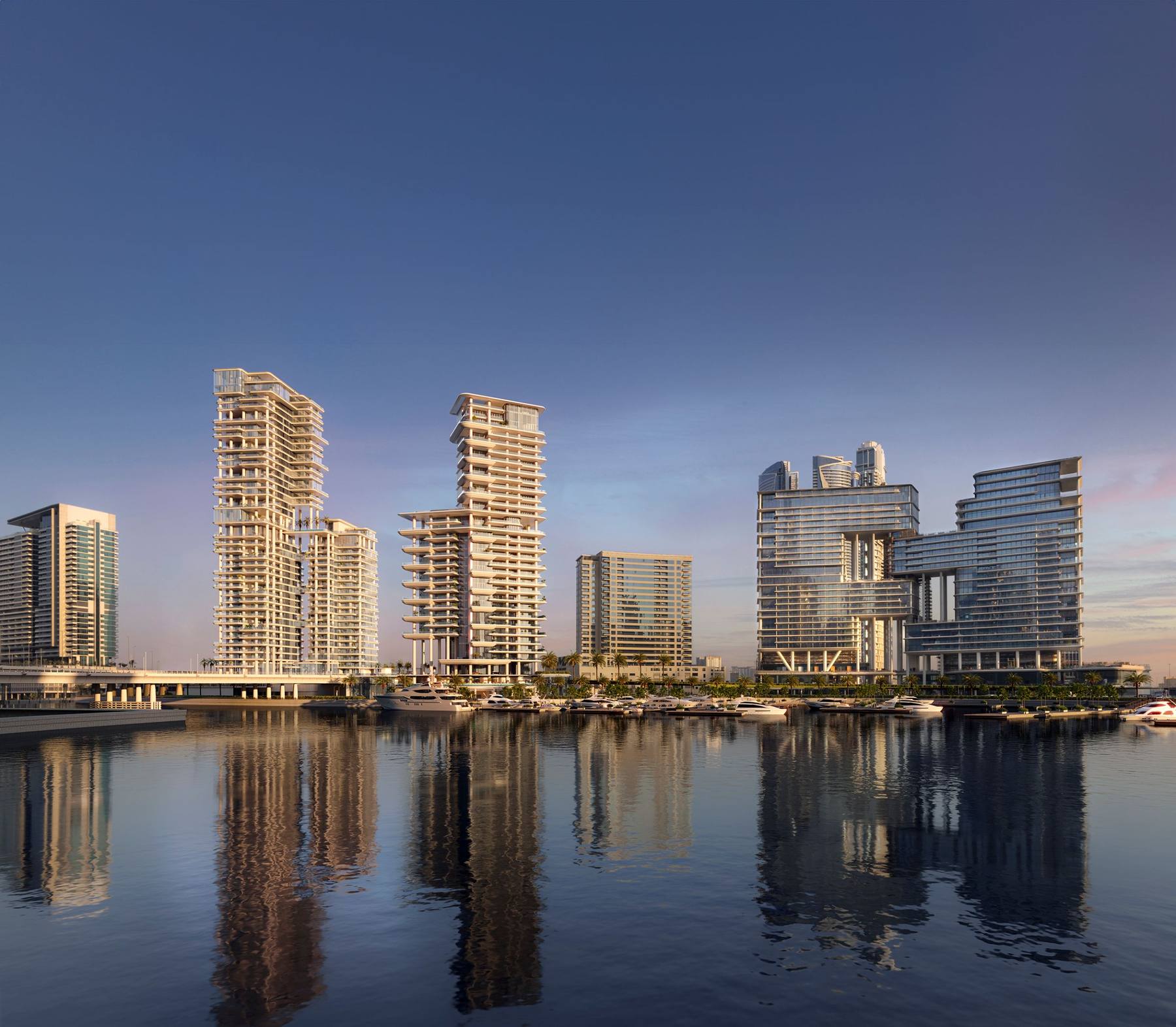
For most of my career, the first question a client asked me was what to buy in Dubai. More and more, the conversation now starts a step earlier. Should the family be here at all? For which months of the year? And how does Dubai sit alongside London, New York or the Mediterranean in a life that already spans several countries?
Those questions have a cause. A very large amount of private wealth is passing to a younger generation that moves more easily than its parents ever did, and it is choosing its cities carefully. Savills has just mapped where that generation is settling, and I have spent the past few weeks reading it closely. This is my reading of the map, city by city, and of where Dubai fits on it.
The largest handover of wealth in history
The numbers behind this are difficult to picture. Capgemini estimates that around US$84 trillion will change hands over the next two decades, with roughly US$72 trillion passing directly to heirs and around US$12 trillion going to philanthropy. At the very top, the Altrata Wealth Report 2025 counts 510,810 ultra-high-net-worth individuals worldwide, holding around US$60 trillion between them.
What matters for property is not only the size of the transfer but who is receiving it. The heirs are, on the whole, far more international than the generation before them. Many were educated abroad, work across time zones and already have family in more than one country. Savills notes that around 80% of self-made ultra-high-net-worth individuals now live outside the country where they made their fortune. For this generation, where to live is not inherited along with the assets. It is a decision, and increasingly a deliberate part of how a family plans its wealth.
That matches what I see in Dubai. The younger buyers I meet ask about schools, flight times, where the family office will sit and how residence works for each member of the family, often before they ask about the view. A home is no longer chosen in isolation. It is one piece of a plan that may cover residence, education and business structures in three or four places at once.
How Savills built the map
In its Spotlight on Wealth Trends 2026, published this October, Savills scored more than 100 wealth hubs on 48 indicators, drawing on sources that range from IMD and Oxford Economics to flight data, the Michelin Guide and university rankings. The indicators sit under four pillars: business, governance and connectivity; wealth clusters and the local environment; wealth management and taxation; and lifestyle.
Savills defines next-generation wealth as people under 40 who have inherited significant wealth, are about to benefit from the transfer, or have built their own fortune. The result is its Next-Generation Wealth Hubs Index. It is worth reading as a picture of preferences rather than a league table of property prices, and I will come back to what it means for prices later.
New York: still the benchmark
New York ranks first, both in the Americas and globally. It has the largest population of high-net-worth individuals, of younger wealthy residents and of billionaires of any city Savills tracked, including 648 high-net-worth individuals under 40. It also leads on international schools, high-end retail, fine dining and hotels.
Savills acknowledges that recent policy changes in the city have given wealthy residents new things to think about, but its conclusion is that nothing else yet matches New York's concentration of talent, capital and opportunity. The Hamptons, ranked 21st on their own, work as the city's weekend extension, which is a pattern I will return to: the great cities increasingly come paired with a place to retreat to.
Miami and Palm Beach: lifestyle and tax together
Miami ranks second overall, and the reasons are instructive. Only London scores higher on lifestyle. Miami combines that with favourable personal and business taxes, which has turned it from a holiday city into a business one. It is now home to 243 high-net-worth individuals under 40, and its climate, events calendar and social life appeal strongly to a younger generation.
Further up the coast, Palm Beach also ranks within the global top 30. South Florida as a whole, with its marinas, golf and growing cultural scene, has become one of the most sought-after places for wealth that can choose where to live. When clients compare Dubai with somewhere, Miami is very often the city they name. The two have a great deal in common: sunshine, water, low tax and a sense of momentum.
London: the global connector
London ranks third globally and first in Europe, the Middle East and Africa. Its strength lies in depth: professional services, schools and universities, culture, legal stability and a long reputation as a place to keep wealth safely. It is home to 183 high-net-worth individuals under 40 and hosts four of the world's major sporting events each year, Wimbledon among them.
What caught my attention in the London section was the change in what buyers want. Across Mayfair, Kensington and the riverside, Savills reports buyers focusing on turnkey homes, security, concierge services, wellness amenities and health clubs. That is almost exactly the list my own clients bring to Dubai. The preferences of this generation are global, and they travel with it.
San Francisco and Los Angeles: the innovation economy
Despite years of headlines about people leaving California, San Francisco and Los Angeles rank fourth and fifth. The Bay Area has been revitalised by the growth of artificial intelligence and performs strongly on economic output and wealth creation, with 490 high-net-worth individuals under 40. Forbes recorded a record number of self-made billionaires aged 39 and under in 2025, many of them from AI businesses.
Los Angeles has a broader base in entertainment, media and sport, and counts 645 high-net-worth individuals under 40, the second-highest figure in the index after New York. Malibu and the Monterey Peninsula serve as quieter alternatives within reach. The lesson for Dubai is that new wealth follows new industries. Much of the younger money I meet here was made in technology, and it chooses cities that understand how it was made.
Dubai: the wealth magnet
Dubai sits in the global top ten of the index, and together with Abu Dhabi it is the only Middle Eastern city in the top 30. In Savills' chart Dubai appears eighth, behind London and ahead of Monaco, which puts it among the top two or three cities in Europe, the Middle East and Africa. Abu Dhabi is close behind, which says a great deal about how far the UAE as a whole has come.
The reasons Savills gives will be familiar to anyone who lives here: a favourable tax environment, business-friendly policies, sustained investment in infrastructure, an entrepreneurial culture, global connectivity and a high-end offering that can match any city in the world. Dubai also hosts, alongside London, the largest number of major international sporting events each year of any location studied.
Savills is also candid that the Middle East faces heightened geopolitical uncertainty. I think that is the right way to read it. The fundamentals that brought families here have held through difficult periods before, and they are long-term ones: tax, infrastructure and Dubai's position between East and West. But no city is without risk, and a sound decision accounts for that rather than pretending otherwise.
Other research points the same way. Henley & Partners' 2026 wealth migration report gave the UAE the highest score of any country, 85.3 out of 100, for how attractive it is to internationally mobile families. And Dubai Land Department data shows how that demand has translated into property: the city recorded 96,518 sales worth AED 264 billion in 2022, and 215,583 sales worth AED 686 billion in 2025. This year, to 30 October, the median price per sq ft is AED 1,716, slightly above last year's AED 1,671.
There is one more point in the Savills report that I think is underappreciated. Across the Gulf, established families are formalising succession: family governance, the involvement of the next generation and long-term plans for capital that is staying in the region. Dubai is not only receiving wealth from elsewhere. It is also where a great deal of Gulf wealth is being handed down, and property is often the most personal part of that handover.
Rome and Italy: the Mediterranean grows up
Lifestyle-led Mediterranean cities continue to rise. Rome ranks 16th globally and ninth in Europe, the Middle East and Africa, and has 162 high-net-worth individuals under 40, placing it among the 15 leading cities in the world for young wealth. Milan ranks 14th, and Tuscany also scores well.
Italy's flat tax for new residents is a large part of the story, along with restaurants, culture and quality of life. Savills also notes that southern Europe is increasingly used all year round rather than for a summer season. That shift matters. When a family lives somewhere for most of the year, it buys differently: it wants schools, healthcare and a home that works in January as well as in July.
Barcelona: culture, coast and character
Barcelona ranks 26th globally and 14th in Europe, the Middle East and Africa, and scores particularly well on lifestyle: architecture, beaches, marinas, international schools and easy access to the Costa Brava. It hosts three major sporting events a year, across Formula 1, golf and tennis. Savills notes that buyers and renters from Latin America are supporting demand across Spain and Portugal, with Pedralbes still the most sought-after residential address in the city.
The French Riviera and Monaco: a wider buyer base
The French Riviera ranks 28th globally. Its buyers have changed: the market no longer depends on trophy-home purchasers and now draws entrepreneurs, investors, finance professionals and technology executives, more of whom live there all year. Nice airport is now France's third largest and its leading hub for private aviation. Turnkey homes with sea views and outdoor space dominate demand.
Nearby Monaco ranks ninth globally, one place behind Dubai, and remains the most expensive prime residential market in the world, at an average of around US$6,135 per sq ft. I look at how Dubai's best addresses compare with that figure in my next article.
What the map tells us
Read together, the cities on this list have more in common than their differences suggest. The patterns I take from the research, and from my own conversations, are these:
- Tax and lifestyle now travel together. Miami, Dubai and Italy have all risen by offering both, rather than one or the other.
- Families are living across several places. Savills describes location as a core part of wealth planning, with residence, education and wealth structures balanced across markets.
- Homes are being used all year. From the Riviera to southern Europe, seasonal homes are becoming main homes for part of the family.
- Turnkey and serviced homes are winning. London's buyers, the Riviera's buyers and Dubai's buyers are asking for the same things: security, service, wellness and a home that is ready on the day they arrive.
- Capital is becoming more selective. Savills expects scarce, high-quality homes in stable markets to be the most resilient, and demand for branded and wellness-led residences to keep growing.
That last point is where the map meets the market, and it deserves its own article. In the next piece, I look at what this generation is actually buying in Dubai, which addresses are genuinely scarce, and what a square foot of the best of Dubai costs compared with Monaco and Hong Kong.
What I would ask a family weighing Dubai
For a family comparing Dubai with London, Miami or the Mediterranean, I start with three questions. Which months will you actually spend here? Who in the family needs residence, and on what basis? And will the home still suit the next generation in ten years, not only this one? The answers usually narrow the search to a short list of buildings and positions within a single conversation.
A home that the family will not always use should also be one that others want to rent, which is why I track registered rents at One at Palm and The Lana in my Rental Index. Past rents do not guarantee future income, but they are a better starting point than a projection.
If your family is deciding where Dubai fits, send me a private enquiry and we can start with those questions.
Sources: Savills, Spotlight on Wealth Trends 2026 (Next-Generation Wealth Hubs Index), October 2026, including figures it attributes to Capgemini and the Altrata Wealth Report 2025; Savills ranks as published in its report and summarised by JamesEdition (28 October 2026) and The National (14 October 2026); Henley Private Wealth Migration Report 2026 (16 June 2026). Dubai property figures: Dubai Land Department registered sales, aggregated via DXB Interact, data as of 30 October 2026; 2026 is year to date. Rankings measure attractiveness to next-generation wealth, not property performance. This is general information, not financial advice.