In short
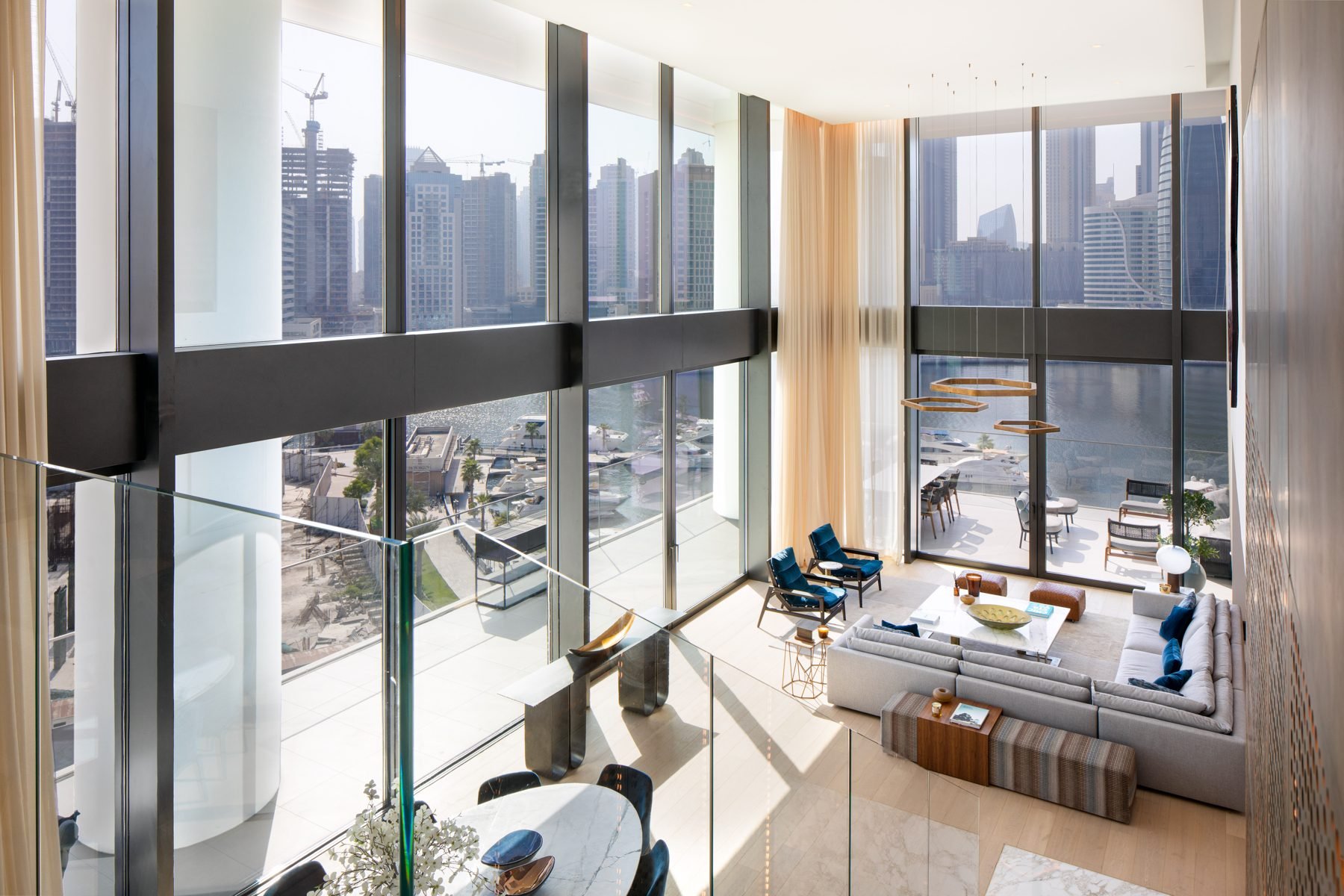
- Average daylight is around 30,000 lux. Museums light paintings at 50 to 150 lux. In a glass-walled Dubai living room, the painting sits on the wrong side of a 200-fold gap.
- Light damage is light multiplied by time: 200 lux for 200 hours does what 50 lux does in 800. Less light, or fewer hours of it, buys years.
- Judge a home by its usable walls, not its glass. If it cannot give you one solid, shaded, interior wall as long as your largest work, it is a beautiful home for someone else's collection.
Next week Frieze opens its first fair in the region. Frieze Abu Dhabi brings 84 galleries to Manarat Al Saadiyat, with public days from 20 to 22 November according to the fair's official site, and Frieze Sculpture runs on Mamsha Beach until 16 December. Many of my clients will make the drive. A question clients often ask me after a fair like this is not what to buy, which is a conversation for their art adviser, but where the work will actually live. In Dubai that is harder than it sounds, because we sell homes on their glass.
The trouble with a view
A prime Dubai residence is designed to make the wall disappear: floor-to-ceiling glazing, wide terraces, the sea in every room. A collector needs the opposite in at least one room. The Canadian Conservation Institute's guidelines for displaying paintings put the normal museum range at 50 to 150 lux, against average daylight of around 30,000 lux, and say paintings should ideally see no ultraviolet from daylight at all. They also advise against hanging on a building's perimeter walls or near air vents, and recommend a stable relative humidity between 40 and 60% and a temperature somewhere between 16 and 25°C.
The figure I find most useful is the simplest. Damage is cumulative, so 200 lux for 200 hours does the same harm as 50 lux for 800 hours. Halve the light and you roughly double the time. That is why the question is never just whether a room is bright, but which wall the sun reaches, for how long, and through what glass. And because the institute's figures assume a building that is looked after all year, the riskiest Dubai home for a canvas is the one that is shut down for the summer.
The collector's brief, at a viewing
| Check | Why it matters | Ask |
|---|---|---|
| Solid wall length | Glass leaves little to hang on | Which interior walls are free? |
| Sun on the wall | Daylight is ~200× museum light | Where does the sun fall at 4pm? |
| Glazing | Ultraviolet fades pigments | Is the glass UV-filtering? In writing |
| Climate | Stable 40–60% humidity | Does the AC run while I am away? |
| Height and route | Large works must get in | Ceiling height; lift and door sizes |
| Security | The work stays when you travel | Controlled access; a team on site? |
Where Dubai's residences give you the wall
At The Lana Residences in Marasi Bay, with interiors by Gilles & Boissier, the homes I currently present include a full-floor penthouse with a double-height living room and a one-of-one triplex offered shell and core, with double-height volumes. Shell and core is close to the ideal collector's brief: walls, picture lighting and joinery planned around the work, with OMNIYAT Atelier, before the first nail goes in.
On Palm Jumeirah, ORLA Infinity's duplexes, with interiors by YODEZEEN, are delivered fully fitted but not furnished, with furniture à la carte through OMNIYAT Atelier, and security is listed among the building's features. Some of its residences list floor-to-ceiling windows, which is exactly why the brief should start with which walls stay solid. At AVA at Palm Jumeirah, with interiors by Portia Fox, every home is at least 6,390 sq ft, and space is what lets you put a hanging wall deep inside the plan, away from the glass.
To be precise: none of these buildings is marketed with a gallery, UV-filtering glass or museum-grade climate control. What they offer is room, a residence team, and the chance to plan properly. I wrote about the same logic for watches in where a watch collection lives in Dubai.
What I would do
- Before any viewing, list your three largest works with their dimensions, and ask for the lift and door sizes.
- See the home twice, around noon and late afternoon, and note which walls catch direct sun. November is the right month for it, as I said in the season guide.
- Choose the hanging wall first: interior, solid, away from vents. Fall for the view second.
- Ask for the glazing specification in writing. If nobody knows, plan for UV film or blinds, and dimmable picture lighting kept low.
- If the home is off-plan or shell and core, settle walls and lighting with OMNIYAT Atelier before handover. Retrofitting is always harder.
- Keep the climate running when you travel, and agree who checks it.
I am not a conservator, and a serious collection deserves one. But a home that passes this list makes the conservator's job easy.
If you are coming to Frieze and would like to see a few homes with the walls in mind, send me a private enquiry.
Frieze Abu Dhabi dates and venue from the fair's official site (abudhabiart.ae), opened 13 November 2026; gallery count and Frieze Sculpture dates from Khaleej Times, 2 November 2026. Light, humidity and temperature figures from the Canadian Conservation Institute, Environmental Guidelines for Paintings (CCI Notes 10/4), page updated 23 July 2025. Residence features and designers from OMNIYAT project information and the listings on this site. Nothing here is advice on buying or valuing art, and nothing is a valuation of any property.